Research
02
08
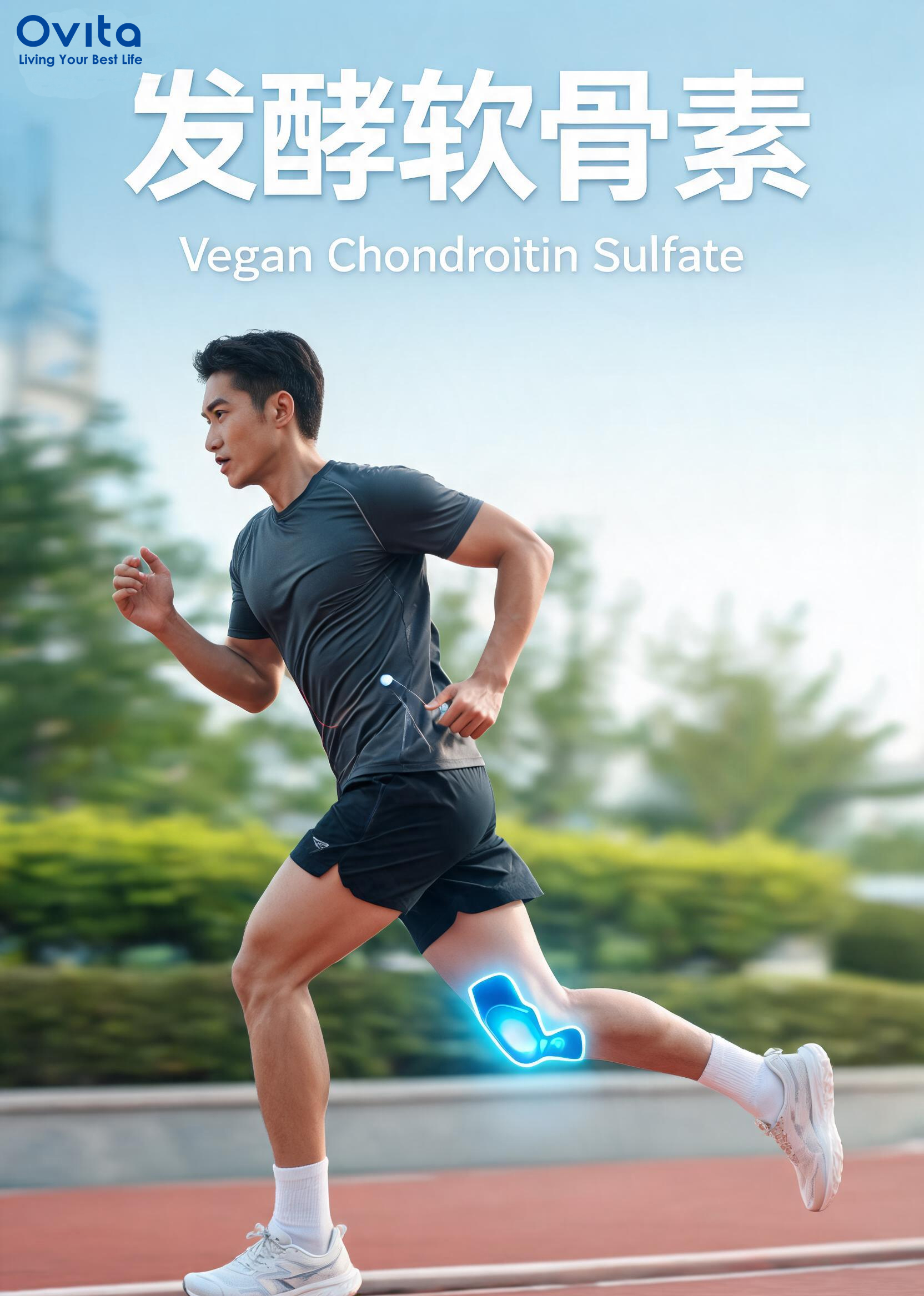
Reshaping the New Future of Joint Health: Technical Analysis and Industrial Outlook of Vegan Chondroitin Sulfate
Driven by the rapid global shift in health consumption toward clean labels, sustainable development and vegan-friendly formulations, the dietary supplement and pharmaceutical raw material industries are undergoing a profound raw material revolution. As a core ingredient maintaining the structure and function of articular cartilage, chondroitin sulfate (CS) has long been primarily extracted from animal tissues. However, the groundbreaking launch of non-animal derived/vegan chondroitin sulfate is fundamentally reshaping this traditional landscape.
This paper thoroughly analyzes the scientific definition of vegan chondroitin sulfate, technical differences from conventional animal-sourced counterparts, core advantages and limitations, and current application status. Combined with the R&D layout of Ovita Biotech, it explores its application prospects within the modern health industry.
1. What Is Vegan Chondroitin Sulfate?
Chondroitin sulfate (CS) is an acidic mucopolysaccharide (glycosaminoglycan, GAG) naturally present in the connective tissues of humans and animals (e.g., cartilage, bones, blood vessels). Its fundamental structure consists of repeating disaccharide chains formed by alternating D-glucuronic acid (GlcA) and N-acetyl-D-galactosamine (GalNAc) units.
Conventional chondroitin sulfate is extracted from the cartilage of cattle, pigs, chickens or sharks. By contrast, vegan chondroitin sulfate (fermentation-derived chondroitin sulfate) leverages modern microbial fermentation technology and cutting-edge enzyme engineering. Engineered microorganisms (such as genetically modified Escherichia coli, Pichia pastoris or Bacillus subtilis) are cultivated to synthesize unsulfated non-animal chondroitin precursors, which then undergo precise biocatalytic sulfation to yield the final product[4].
Core Definition: Fully free of animal organs or cartilage feedstocks, vegan chondroitin sulfate features a chemical backbone highly consistent with human endogenous chondroitin. It is a novel green biomanufactured product that is 100% vegan, non-GMO, and free of contamination risks from animal sources.
2. Vegan Chondroitin Sulfate vs. Conventional Animal-Sourced Chondroitin Sulfate
After decades of market application, traditional animal-derived chondroitin sulfate has exposed persistent pain points including heterogeneous raw material profiles, limited bioavailability and potential biosafety hazards. Fermentation-based vegan chondroitin sulfate delivers technological superiority across multiple dimensions.
Comparative Analysis Table
Evaluation Dimension | Conventional Animal-Sourced Chondroitin Sulfate (Bovine/Shark/Porcine) | Vegan Fermentation-Derived Chondroitin Sulfate |
Raw Material Source | Extracted from bovine bones, porcine bones, chicken sternal cartilage or shark cartilage | Synthesized via microbial fermentation and precise biocatalysis.[4] |
Molecular Weight Profile | High molecular weight with broad distribution (14–26 kDa); high polydispersity | Low molecular weight with uniform distribution (typically 9–10 kDa); excellent homogeneity.[1] |
Bioavailability | Relatively low absorption rate with high gastrointestinal penetration resistance in humans | Regular, low-molecular-weight structure boosts bioavailability by approximately 45%.[1][5] |
Safety & Pathogen Risks | Prion diseases (BSE/mad cow disease), avian influenza, heavy metal accumulation (shark-sourced variants) pose threats | Zero animal-borne pathogens; tightly controlled fermentation process with ultra-low heavy metal and pesticide residues.[5] |
Purity & Batch Consistency | Subject to wide batch fluctuations affected by animal age, feed and species differences | Automated fermentation control delivers purity exceeding 95%, well above the 90% pharmacopoeia standard.[5] |
Dietary Compliance & Ethics | Unsuitable for Halal, Kosher and strict vegan consumers | 100% microbial/plant-derived; compliant with Vegan, Halal and Kosher certification standards |
3. Advantages and Limitations of Vegan Chondroitin Sulfate
3.1 Core Advantages
(1) Superior Bioavailability and Clinical Efficacy
Clinical studies demonstrate that the smaller, uniformly sized molecular chains of fermentation-derived chondroitin sulfate yield markedly higher intestinal absorption compared with bovine chondroitin sulfate, with absorption elevated by roughly 45%[1][5]. Clinical data verifies that a daily dose of only 600 mg fermentation-derived chondroitin sulfate delivers equivalent joint-protective and anti-inflammatory effects to 800–1200 mg to 1200 mg daily of animal-sourced chondroitin sulfate.[2][3]
(2) Uncompromised Safety and High Purity Profile
It completely eliminates cross-species transmission risks of BSE, foot-and-mouth disease and avian influenza, as well as heavy metal (mercury, lead) buildup from deep-sea marine raw materials. The product carries a mild odor with minimal impurities.[5]
(3) Universal Population Compatibility and Sustainable Green Production
It caters to the fast-growing vegan, flexitarian, Halal/Kosher religious dietary and allergy-prone consumer groups. Microbial fermentation consumes no livestock or marine resources, drastically cutting carbon footprints.[4]
3.2 Challenges and Limitations
(1) High Technical Barriers and Production Costs
Precision control of sulfation patterns (targeted sulfation at CS-4 or CS-6 positions) presents significant technical hurdles. Heavy upfront investment in R&D and fermentation equipment leads to higher production costs than crude extraction from slaughterhouse byproducts.[4]
(2) Limited Market Consumer Awareness
Public understanding of fermentation/plant-based chondroitin sulfate is still in the early popularization stage, requiring sustained scientific outreach by brands and research institutions.
4. Industry Status and Market Application Trends
Global joint health markets are witnessing dual trends of clean label adoption and advanced compound formula upgrades:
(1) The Final Puzzle Piece of the Vegan Joint Care Trio
Vegan glucosamine and MSM have achieved large-scale commercialization for years, yet chondroitin sulfate remained constrained by animal feedstock limitations. The commercial maturity of vegan chondroitin sulfate completes the critical missing component for fully vegan joint repair formulations.[5]
(2) Advancing Regulatory Certifications and Standardization
The European Food Safety Authority (EFSA) and United States Pharmacopeia (USP) are progressively establishing application standards for microbial fermentation extracts in dietary supplements, laying a compliant foundation for mainstream global market penetration.[4]
(3) Diversified Cross-Industry Applications
Beyond premium dietary supplements (capsules, tablets, gummy soft chews), vegan chondroitin sulfate features outstanding water solubility, low viscosity and neutral odor. It is being widely adopted in functional beverages, high-end pet joint supplements and medical aesthetic skincare products.
5. R&D Layout and Industrial Empowerment of Ovita Biotech
Over 10% of the global population identifies as vegan or flexitarian, paired with an enormous Halal and Kosher consumer market. For a long time, these groups faced a critical pain point in joint care: prohibitively expensive fully vegan core formulations. While fermentation-derived vegan glucosamine is mature and cost-effective, fermentation chondroitin sulfate has historically carried steep price tags.
As a pioneer tracking industry trends in chondroitin sulfate, Ovita Biotech Co., Ltd. consistently advances cutting-edge fermentation and synthetic biology breakthroughs, and actively explores future industrial partnerships and application ecosystems.
As a key player within the global chondroitin sulfate supply chain, Ovita Biotech collaborates closely with synthetic biology specialists on vegan chondroitin sulfate. Joint research targets improved fermentation yields, optimized sulfation technologies and cost-reduction strategies for fermented chondroitin sulfate to drive industrial breakthroughs.[4]
International-Grade Quality Control System
Ovita Biotech operates GMP-compliant automated production lines delivering purity levels exceeding conventional industry benchmarks. The company holds multiple globally recognized certifications including ISO, HACCP and GMP, enabling brand partners seamless expansion into international markets.
Customized Application Solutions
Tailored to diverse formulation requirements (high-solubility powders, high-compressibility tablets, liquid beverages), Ovita Biotech supplies vegan chondroitin sulfate with customized molecular weight ranges and physical properties, helping clients build differentiated competitive product portfolios.
References
[1] Volpi, N., et al. (2019). Oral Bioavailability and Pharmacokinetics of Nonanimal Chondroitin Sulfate and Its Constituents in Healthy Male Volunteers. Clinical Pharmacology in Drug Development, 8(3), 336-345.
[2] Rondanelli, M., et al. (2019). Effectiveness of non-animal chondroitin sulfate supplementation in the treatment of moderate knee osteoarthritis in a group of overweight subjects: a randomized, double-blind, placebo-controlled pilot study. Nutrients, 11(9), 2027.
[3] Rondanelli, M., et al.(2020). Short- and Long-Term Effectiveness of Supplementation with Non-Animal Chondroitin Sulphate on Inflammation, Oxidative Stress and Functional Status in Obese Subjects with Moderate Knee Osteoarthritis. Antioxidants, 9(12), 1241.
[4] Badri, A., & Williams, A. (2023). Microbial Production of Chondroitin and Glycosaminoglycan Derivatives: Advances and Perspectives. Molecules / ResearchGate.
[5] Gnosis by Lesaffre. (2021). Fermentation-Derived Chondroitin Sulfate: Bioavailability, Safety, and Clinical Efficacy Performance.